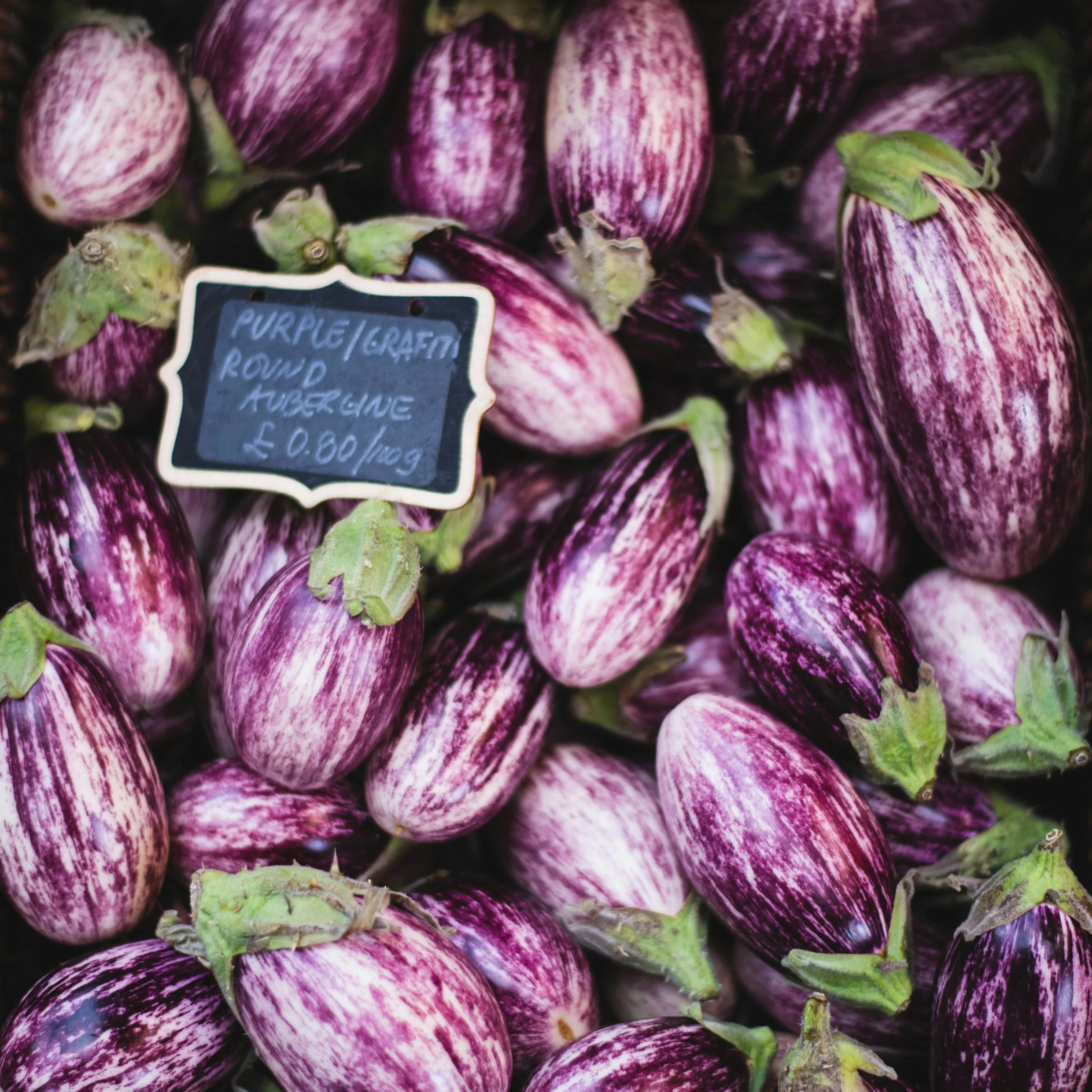
Grower's Guide - June - written by Chef Consultant, Celia Brooks

Outlandish Aubergines - Chocolate, Smoke & Salt
Are you ready for a crazy sounding dish, that’s also easy to make, wickedly indulgent, and a much-adored Italian classic? Here it is: Chocolate Aubergine Torte, or Torta di Melanzane al Cioccolato.
That’s right, chocolate + aubergines = YUM. You simply slice aubergines thinly (salt them first if you have time - see below), dust in flour, and fry in olive oil until golden. Then layer up in a cake tin (or individual shallow bowls or ramekins) with generous coatings of sauce made from dark chocolate and butter melted together. You can add smears of raspberry jam to the layers, pine nuts or toasted flaked almonds, candied fruit or mascarpone. The aubergine layers take on a flavour and texture much like choux pastry. It is a truly dazzling way to use aubergines.
How about aubergines + smoke? Also super YUM. And super easy, if you have a gas cooker.
Aubergines have a unique talent: they can be transformed into a hero ingredient that imparts a deep smoke flavour to a dish. No other food can do it quite like this: the aubergine can be put directly into scorching flames, and as its tough skin blisters and burns to ash, it produces smoke, which permeates its spongy interior with flavour, while simultaneously steaming it in its own juices. It then becomes a different thing altogether: a mound of silky plant flesh full of delicious smoky juice. It just needs a few more ingredients to make it ambrosia.
The most familiar use for smoked aubergine is as the foundation of the Middle Eastern dip baba ghanoush. But smoked aubergine flesh can also be added to curry (see below), bean or meat chilli, and salsa to impart a smoky body. It’s quite amazing!
To smoke an aubergine, choose a long and thin-ish one. Push the fork firmly into the stem to use as a turning tool. Place the aubergine directly onto a high gas flame on the cooker. Turn with the fork occasionally, moving it slightly every 4-5 minutes to cook all parts, until completely soft and collapsed. The skin should be blackened to the point of ash in places, and steam should be escaping through the holes. Remove it to a plate and leave to cool completely. Chop off the stem, then scrape off as much of the charred skin as you can - a few black specks left on are inevitable.
Now the ever-puzzling question about aubergines: to salt or not to salt? I have experimented with this hundreds of times over the years and my conclusion is firm. You only need to salt them first if you are frying them in oil.
Here’s why:
Firstly, any “bitter” juices which aubergines may have contained in the past – a compound which also makes some people’s mouths tickle – has been bred out of the modern aubergine, so traditionally the salting before cooking was essential to draw this element out.
Secondly, the salting does change the texture of the flesh, collapsing its watery cells, which has the effect of preventing them from absorbing too much oil. So my conclusion is: if, and only if, you are frying aubergines and want a crisp rather than oil-laden result, do salt them first. Any other cooking method (roasting, char-grilling, steaming, smoking etc.) does not require you to perform this step. But do add a little salt during other cooking methods or to the final result, to enhance the flavour.
Here’s how:
Sprinkle cut pieces of aubergine lightly with salt and place in a colander for about 30 minutes. Pat dry before cooking. (Not required in the recipe below.)
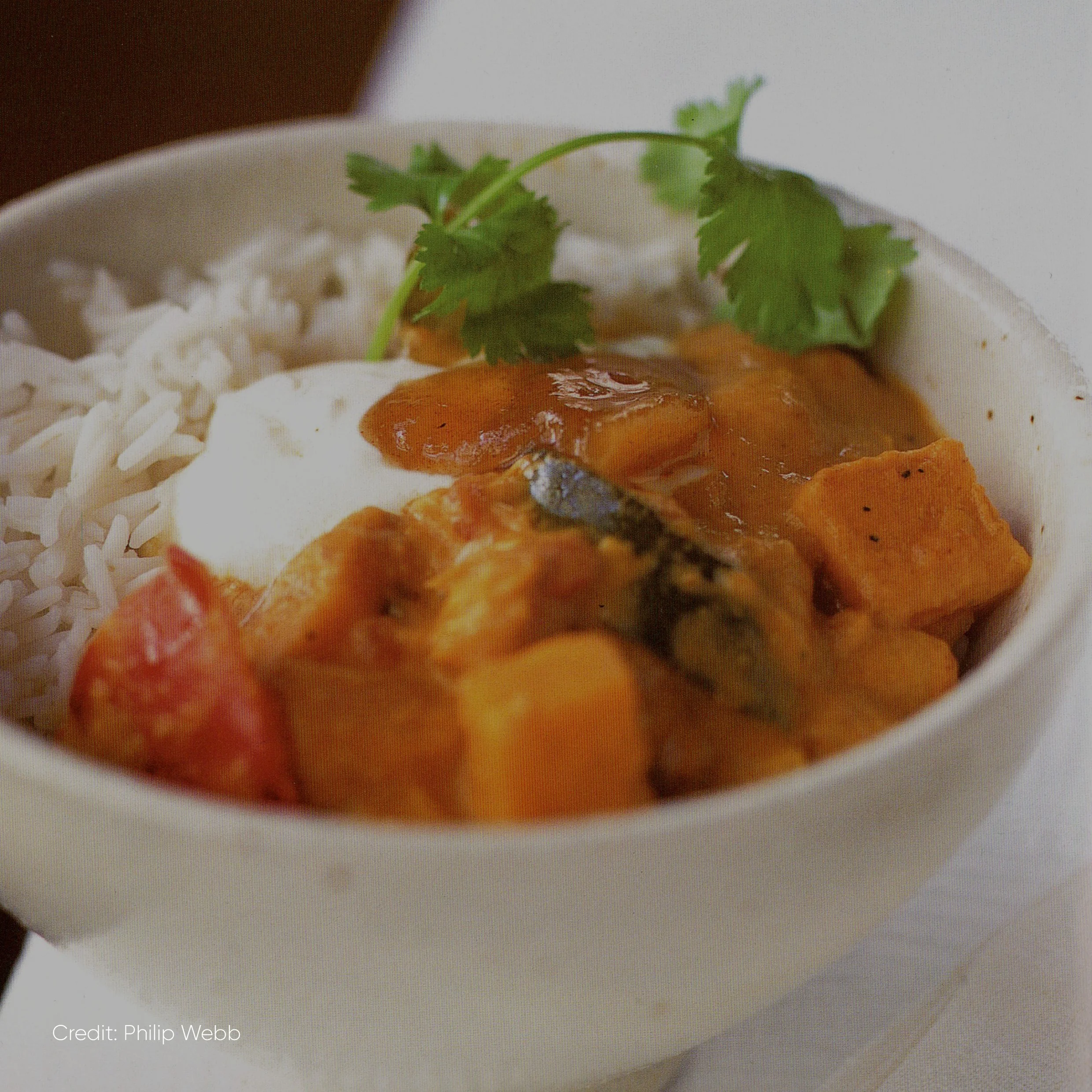
Smoked aubergine and coconut curry
From “New Vegetarian” by Celia Brooks
I set out to re-create the subtle smoked flavour of Indian dishes cooked in a tandoor oven, and here is the result. Founded on a charred, then puréed aubergine, this unusual curry is incredibly good. Don't be put off by the long list of ingredients for the spice paste - it's easy to make and will add a massive depth of flavour. The curry can be made in advance and, in fact, improves by being left overnight so that all the spicy flavours can develop.
Serves 4
Ingredients
For the spice paste
1 Tbsp cumin seeds
1 Tbsp coriander seeds
½ teaspoon cardamom seeds, from about 10 pods (optional)
½ teaspoon fenugreek seeds (optional)
4 cm piece fresh ginger, grated
4 garlic cloves
1 teaspoon ground turmeric
1 teaspoon hot pepper flakes (or to taste)
1 tomato, quartered
2 teaspoons sea salt
1 teaspoon sugar
For the curry
1 medium aubergine (about 250g)
2 Tbsp vegetable oil
1 red onion, chopped
1 red pepper, chopped
1 sweet potato, peeled and diced (about 250g)
1 medium courgette (about 250g)
1 tin chickpeas, rinsed and drained
1 tin chopped tomatoes
250ml unsweetened coconut milk
sea salt, to taste
To serve
Cooked basmati rice, sprigs of coriander, plain yoghurt, mango chutney
1) First make the spice paste. Dry toast the spice seeds in a frying pan, shaking until they pop and turn lightly golden. Transfer to a blender or spice grinder, add the remaining ingredients and about 80 ml water, and grind to a smooth paste. Set aside.
2) Smoke the aubergine directly over a high gas flame until charred and softened, about 15 minutes. Alternatively, prick with a fork and roast in a preheated oven at 220C for about 40 minutes.
3) Let cool, then peel and discard the skin. Don't worry if a few charred bits remain - this will add extra flavour.
4) Heat the oil in a large, heavy-based saucepan, add the onion, and cook until softened. Add the spice paste and stir for 2 minutes to release the aromas, then add the pepper, sweet potatoes, courgettes, and chickpeas. Cover and cook, stirring occasionally, for 10 minutes. Add the tomatoes and 250ml water, then bring to a boil and simmer, uncovered, for about 20 minutes.
5) Put the peeled aubergine in a blender, add the coconut milk, and pulse to a coarse purée. Add to the pan and bring back to a simmer. Add salt, if necessary.
6) Cook for 10 minutes, then remove from the heat, cover, and let stand for at least 30 minutes or preferably overnight.
7) Reheat, then serve with the rice, coriander sprigs, yogurt, and mango chutney.