Grower's Guide - July - written by Chef Consultant, Celia Brooks

Sniff Your Tomatoes
Ripe, juicy tomatoes plucked straight from the vine, still warm from the sun’s rays, are one of the plant world’s most delectable summer offerings. However, they are fragile creatures. If traveling thousands of miles, they won’t survive the trip to market without splitting.
The solution for the commercial farmer is to harvest them unripe, at the “mature green” stage, while they are still hard and can be stacked in piles and crates without crushing. They will turn red eventually, but they don’t gain any more flavour. In fact, commercial tomatoes are often speed “ripened” by being gassed with ethylene in warehouses to change their colour. While harmless, it’s mostly cosmetic and the flavour never catches up. Tomatoes in supermarket packets labelled “vine ripened” are probably still cut unripe from the mother plant, but I find they are generally better than the commonest loose ones from the supermarket, which are tasteless bullets.
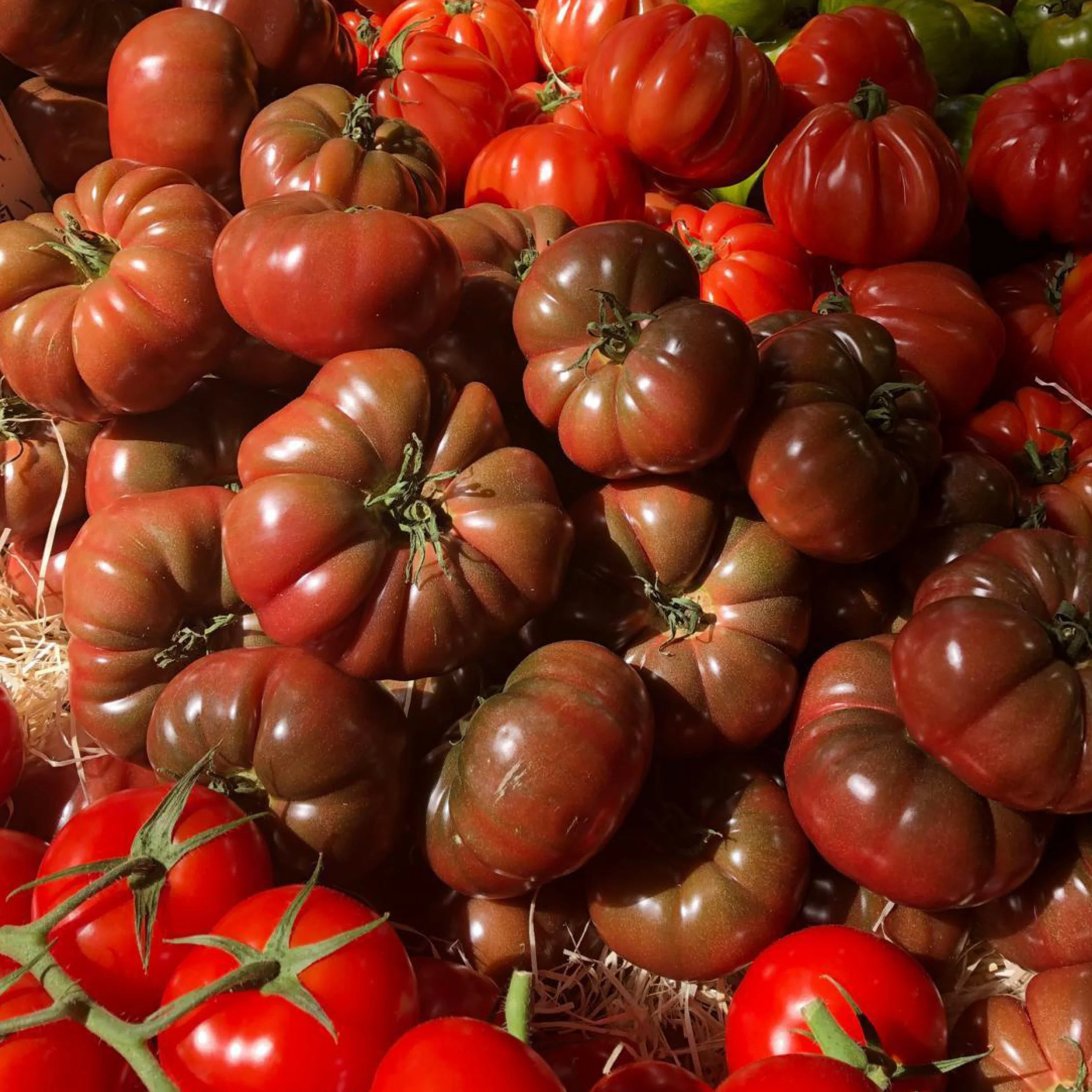
I judge the quality and ripeness of tomatoes by smell: good tomatoes have a unique perfume – somewhere between herbal and yeasty – it’s just plain tomatoey! Sniff the stem end and rate the fragrance. Nothing? Keep looking. A whiff? Probably fine, or just okay. Potent? Yay, you are probably in luck! Next is the gentle squeeze test: they should be firm - not hard, not soft.
For truly delectable tomatoes, the best choice is, of course, to grow your own. A warning to the uninitiated: the flavour of homegrown tomatoes will spoil you, and you might never enjoy a commercially grown one again. My homegrown tomatoes on my allotment won’t be ready until August, so meanwhile I’ll be shopping for the cream of the imported crop, mostly from smaller farms in Spain and Italy, or the domestic beauties from greenhouses in the Isle of Wight. Seek them out from a veg specialist, gourmet market or farmer’s market where they stock lots of shapes and colours. If they have actually ripened in the sun of their home country and not travelled too far, they will taste better.
As for storage, do not, I repeat DO NOT store tomatoes in the fridge – they absolutely hate it. Their flesh will turn woolly and they will lose flavour fast. If you have to store a partially cut tomato in the fridge, best use it for cooking afterwards. As soon as you get your tomatoes home, remove any packaging and store exposed to the open air at room temperature, and eat them ASAP.
Tomatoes’ nutritional superpower is a high concentration of lycopene, a potent antioxidant which blocks UV damage and supports bone health. Cooking tomatoes, especially in olive oil, makes lycopene more available to the body; even processed tomato products such as ketchup are a source of the lycopene health boost.
Here are some simple ideas for tomatoes and a full recipe below.
Tomatoes & bread: When my homegrown tomatoes are gushing off the vine in late summer, I often rely on this heavenly marriage for a quick meal, usually in a classic Mediterranean style. My favourites are Pan amb tomàquet from Catalunya, Dakos from Crete, Panzanella and Pappa pomodoro from Tuscany. Look them up if you aren’t familiar!
Slow-roasted tomatoes: A simple way to glorify good tomatoes, and to make less good tomatoes tastier, by concentrating their natural flavours within their skins. Cut in half and lay cut side up on a lined baking sheet. Tuck a few slices of garlic right into the juicy bits of each, drizzle with olive oil and a few drops of balsamic vinegar, and season with salt and pepper. Add a pinch of brown sugar or a few drops of honey to each if you wish. Roast in the oven at 150C for 1 -2 hours, (depending on which tomatoes and how many) until shrunken, golden at the edges, and brimming with juice. If you don’t have that much time, you can cheat by cooking at 170C for 40 minutes or so, but no hotter or they will collapse – in which case you will have a lovely roasted tomato sauce instead, so all good.
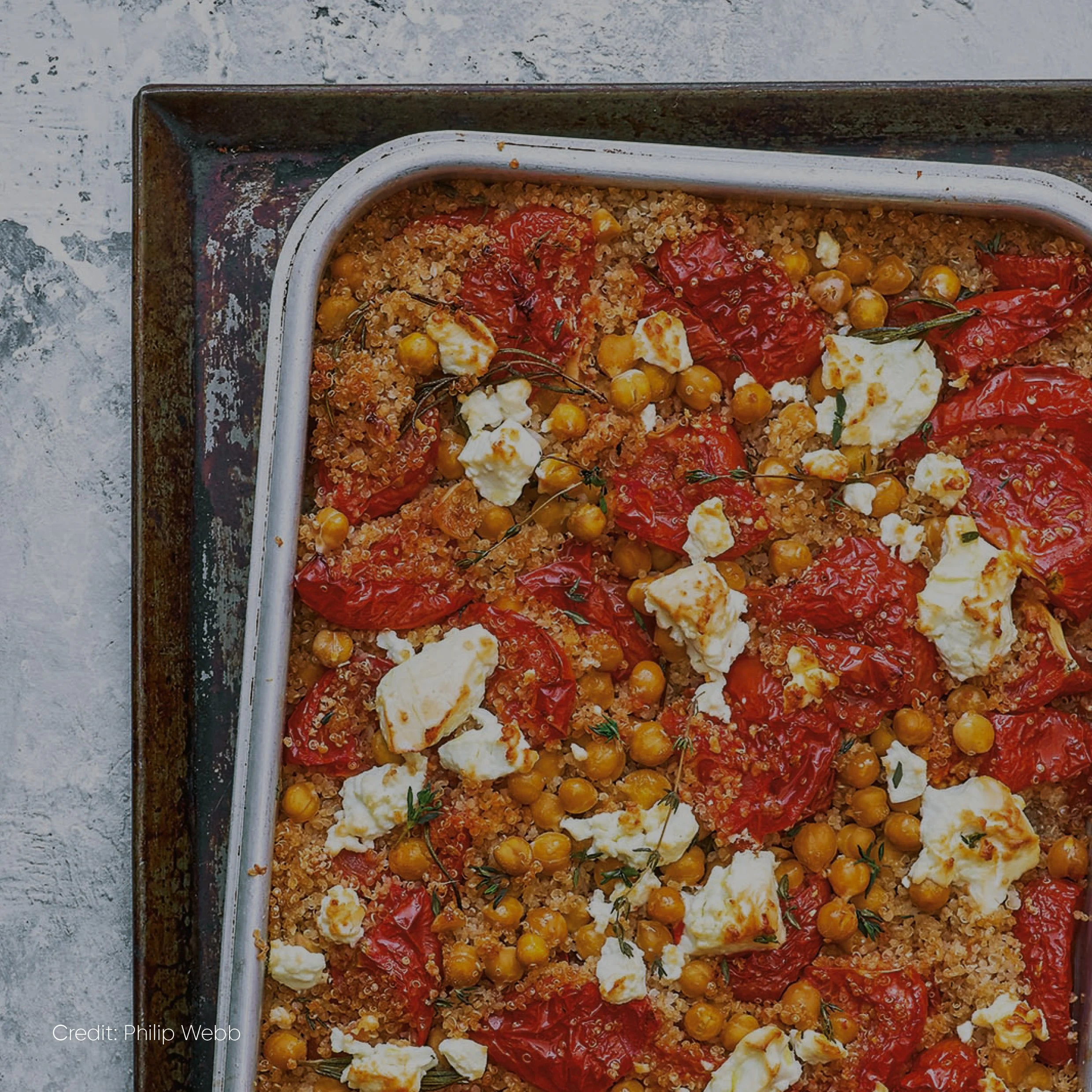
Tomato & Feta grain roast
From “SuperVeg” by Celia Brooks
I came up with this fuss-free recipe in an emergency situation when the number of dinner guests suddenly doubled at the last minute – and a heap of fresh tomatoes and a few kitchen staples (including a packet of pre-cooked wholegrain rice) saved the day. It’s a one-dish saucy pilaf, which makes a rustic meal in itself – sauce, plants, carbs, protein: it’s all in there. I’ve been making variations on this theme ever since, whacking in different grains and beans, sometimes adding olives or capers with the feta. Feta is all too often thought of as a cold salad cheese; roasting it creates a delectable chewy crust giving way to soft creaminess.
Serves 4
Ingredients
800g fresh ripe tomatoes (about 9 medium), quartered, or cut in chunks if very large
3 garlic cloves, sliced
1 tablespoon best balsamic vinegar
2 teaspoons runny honey or maple syrup
4 thyme sprigs
4 small rosemary sprigs
4 tablespoons extra virgin olive oil
sea salt and freshly ground black pepper
250g cooked grains such as wholegrain rice, spelt or quinoa
1 x 400g can chickpeas, drained
200g block feta cheese, drained
Method
1) Preheat the oven to 220C. Place the tomatoes, garlic, balsamic, honey, herbs, and 2 tablespoons of the oil in the casserole dish and season well with salt and pepper. Stir to combine and spread out in an even layer. Place in the middle of the oven and roast for about 30 minutes, until the tomatoes have softened, and simmering juices are pooling in the bottom of the dish.
2) Remove from the oven and stir the cooked grains and drained chickpeas into the tomatoes, gently and thoroughly, until evenly mixed. Now take the feta and break it over the surface in several large chunks and crumbles. Pour the remaining 2 tablespoons of oil all over, coating the cheese.
3) Move an oven rack towards the top of the oven. Place the dish on it and roast for a further 15 - 20 minutes, until the feta shows patches of golden crust.
4) Serve hot at the table, spooned into shallow bowls.